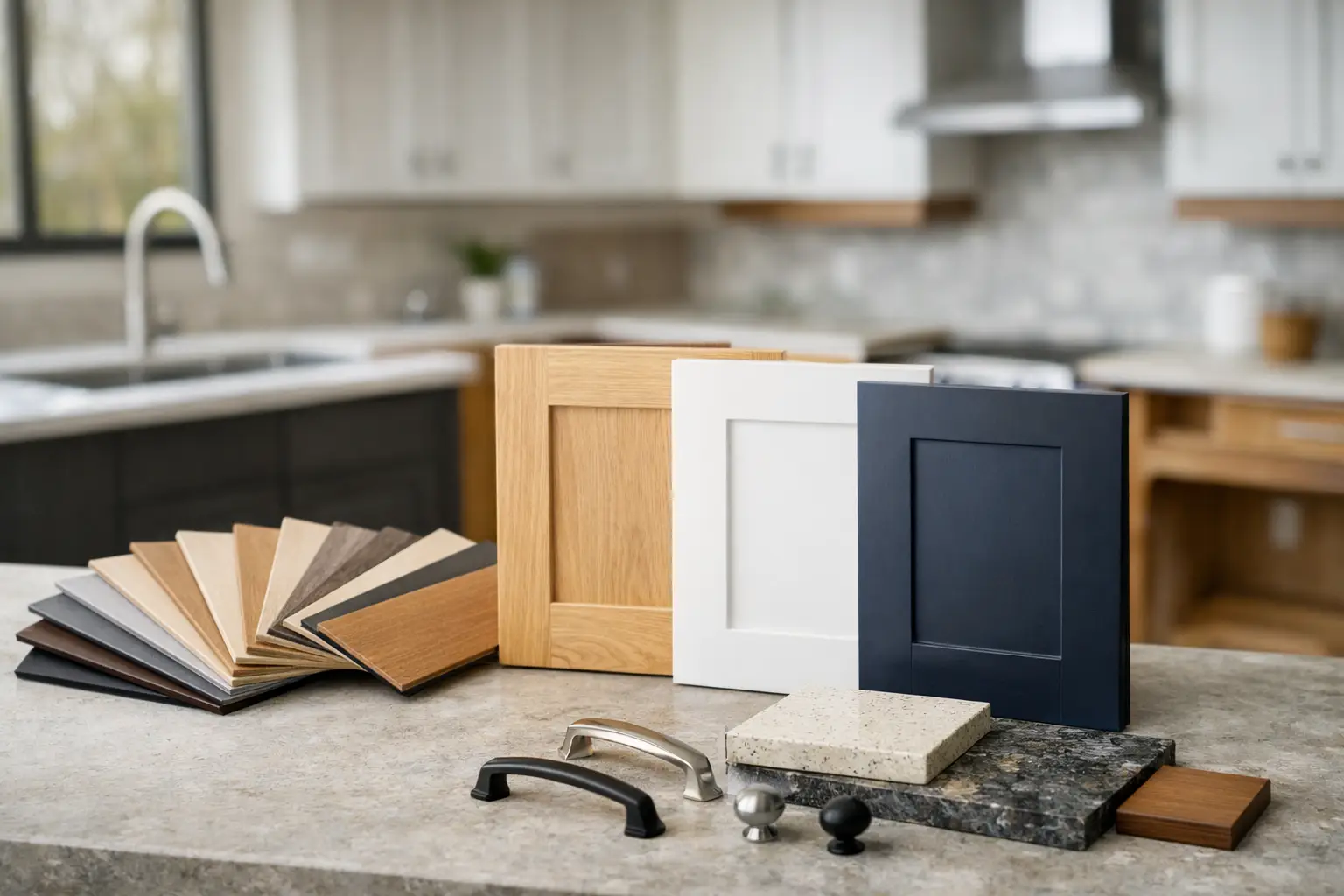
A cabinet door sample looks like one color under the bright, even light of a showroom and a noticeably different color propped against the wall of your own kitchen at four o’clock on a January afternoon in Seattle. We send samples home with clients for exactly this reason. Warm whites go yellow in low north light. Cool grays go flat and slightly institutional. A green that read as sophisticated under halogen can read as murky when the only light coming in is bouncing off a wet street.
Cabinetry is the largest visible surface in almost any kitchen, and the door, its finish, and the hardware on it are the parts you actually touch several times a day for the next fifteen years. Those three choices deserve more attention than they usually get, and they are a different conversation from how the box is built or who builds it.
How do I pick a door style that suits my house?
Start with the trim in the next room. In a 1920s Craftsman with wide fir casings and a substantial baseboard, a cabinet door with some visible construction — a recessed panel with a defined stile and rail — sits comfortably with what is already there. A slab door in that same house is not wrong, but it is a deliberate contrast and it should be handled as one, with enough other modern elements around it that it reads as a choice.
In a mid-century house with flat casings and simple lines, the reverse applies. Heavy raised-panel doors with applied molding will fight the architecture, and no amount of nice hardware will fix it.
Two other things we weigh. Scale: a door style with a wide frame looks generous on a large door and cramped on a narrow one, so a run of skinny cabinets can quietly ruin a profile that looked lovely on a sample. And cleaning: every profile, groove and bead is somewhere that cooking residue collects. In a kitchen used hard, a simpler door is not just a style position — it is less time spent with a toothbrush at the corners.
Shaker, slab, or something with more detail?
Shaker has been the default for a long time, and there is a reason: it is quiet, it fits nearly every house in this city, and it has never looked fashionable enough to look unfashionable later. Our only caution is that “Shaker” covers an enormous range. The width of the rail, the depth of the recess, whether the inside edge is square or slightly eased — these small dimensions are the difference between a door that looks tailored and one that looks generic. Where the cabinet line allows us to specify them, we do.
Slab doors reward good material and punish mediocre material. In a rift-cut white oak or a well-executed painted finish, a slab door looks calm and expensive. In a lesser veneer it looks like a rental. There is nothing to hide behind.
Beaded inset and more detailed traditional doors are beautiful and are a real commitment — they cost more to make, they cost more to keep clean, and they set the tone of a room decisively. We are happy to specify them when the house supports it and the household is honest with itself about the maintenance.
Painted or wood — which one lives better?
Both work. They fail differently, and that is the useful way to choose.
A painted finish gives you color control and a crisp, built-in look. What it does over time is show wear at the edges — around the trash pull, at the door beside the range, at the corner everybody’s hip catches. A factory-applied conversion varnish or catalyzed finish is dramatically more durable than anything brushed on site, and it is one of the specifications we care most about. Painted doors can also develop fine lines at the joints as the wood moves seasonally, which is normal and not a defect, though it surprises people who were not told.
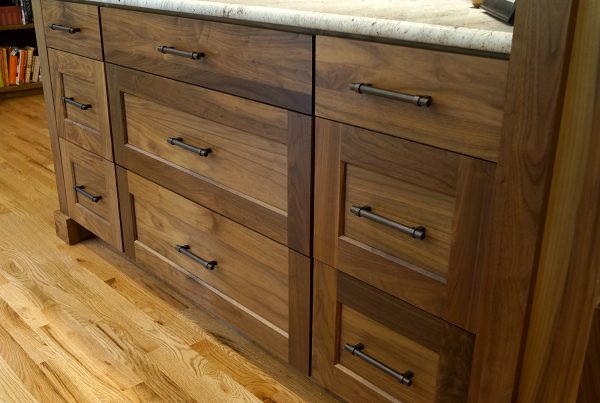
A wood finish hides wear rather than showing it. Grain and variation absorb the small dings that a painted door displays. In our climate, white oak and walnut both behave well, and a natural or lightly toned finish avoids the orange cast that dated so many kitchens of an earlier era. The trade-off is that wood ties you to a warmth and a tone that the rest of the room has to accommodate.
Mixing the two — painted perimeter, wood island, or wood on a single feature run — is often the right answer, and it works when the wood appears in at least one other place in the room so it reads as intentional rather than orphaned.
Does hardware really matter that much?
More than almost anything else per dollar spent, because hardware is the only part of the kitchen you physically hold.
We choose it by hand, not from a catalog photo. Weight matters. A pull with real mass feels different every single time you open a drawer, and cheap hardware on excellent cabinetry is the fastest way to make a kitchen feel less considered than it is. Shape matters for how it lives: a knob is easier beside a range where sleeves catch, a long pull is better on a heavy pan drawer, and anything with a sharp return edge will eventually snag a pocket.
On finish, we usually advise against matching everything perfectly to the faucet. A kitchen where every metal is identical looks staged. Two metals, used consistently, looks designed. Unlacquered brass is worth a specific mention because it will patina — that is the point of it — and it needs to be chosen by someone who wants that, not by someone who will be disappointed in eight months.
How do these choices get made in practice?
Together, and in daylight. We lay out door samples, finish samples, the countertop, the tile and the hardware side by side in the actual room, at different times of day, before anything is ordered. Cabinetry is the anchor — the floor, the counter and the wall color are chosen to work with it, not the other way around — so getting the door and the finish settled early makes every subsequent decision easier.
All of it is resolved during design and priced into the bid, so the cabinetry you approved is the cabinetry that arrives. The questions of how the box itself is built and who builds it are separate ones, covered in our posts on what you are paying for behind the door and on custom versus semi-custom cabinetry, and in our broader kitchen remodeling work.
Cabinet doors are the thing you will look at every morning while the coffee is going. If you want to see how a finish behaves in your own kitchen’s light before you commit to it, that is precisely the kind of afternoon a design consultation with NOR Design & Construction is made of. Book one, or call us at 206-979-3420.