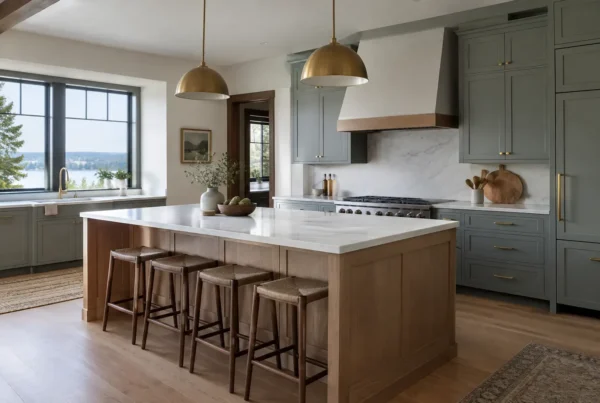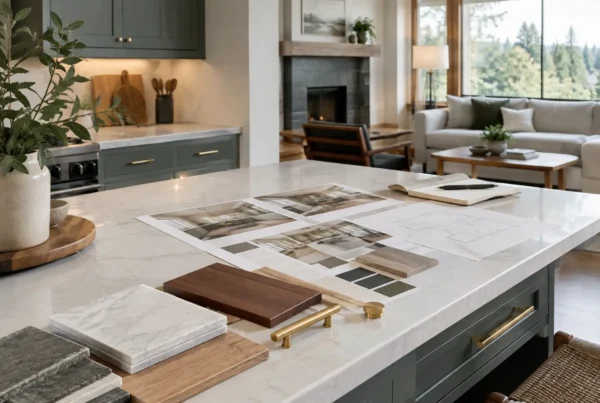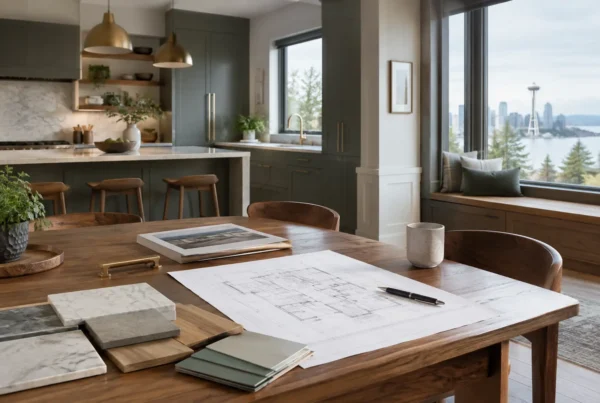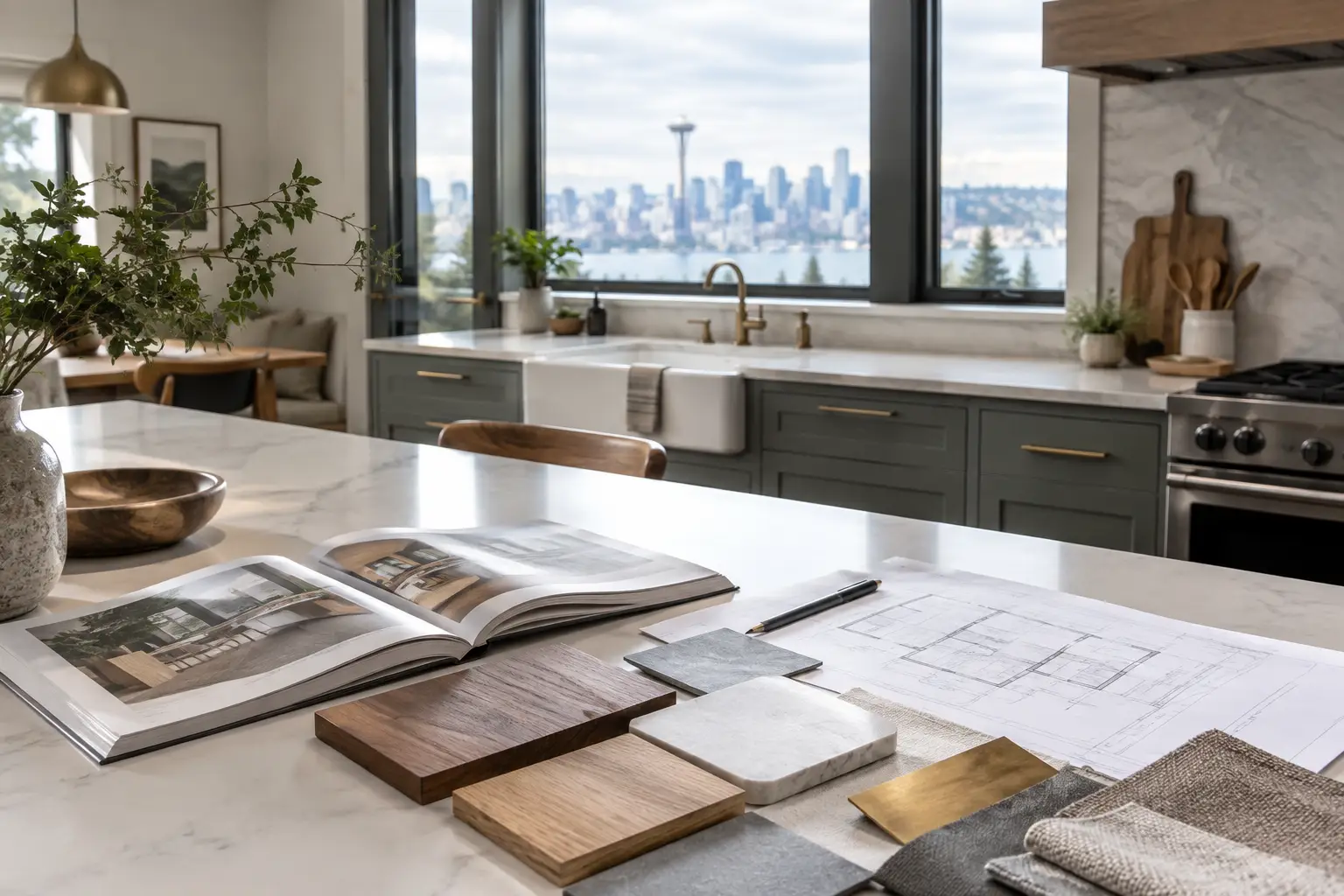
A kitchen can look perfectly serviceable on paper and still fail the people who use it every morning. The refrigerator door blocks the path to the coffee maker. The island is large but somehow never becomes a place where anyone lingers. A dark corner stays dark through Seattle’s long gray winter. If you are asking, should I hire a designer, that disconnect between square footage and daily life is usually the reason.
For a significant remodel, the better question is not whether a designer can make the room prettier. It is whether someone is responsible for making the space work before construction begins, then carrying those decisions through the build without losing the thread. For homeowners remodeling the home they actually live in, that responsibility changes the entire experience.
Should I hire a designer if I already know what I want?
Often, yes. Knowing what you want is a strong starting point, not a complete plan. You may know you want a larger kitchen, a primary bath with more breathing room, or a home office that can close off at the end of the day. A designer turns those intentions into decisions that can be built: dimensions, circulation, storage, lighting, materials, clearances, appliance placement, and the thousands of small relationships between them.
This matters especially in Seattle’s older homes. A 1920s-40s bungalow in Admiral may have charming proportions and a kitchen closed off from the rooms where everyone gathers. Opening it may mean confronting a load-bearing kitchen/dining wall, not simply choosing where an island goes. A Craftsman can also carry original details worth protecting, even while its layout needs to change completely for a modern household.
Good design makes trade-offs visible early. A larger island may improve gathering but narrow a key route. More cabinetry may reduce daylight. Moving a bathroom wall may make the room calmer and more functional, while also affecting plumbing and structural planning. We work through those choices before they become expensive field questions.
What does a designer do that a builder does not?
There is overlap, of course. A capable builder understands construction, sequencing, and the realities hidden inside walls. But interior design asks a different set of questions: How will this room feel at 7 a.m. and at a crowded dinner? Where should the sightlines land? Which surfaces need to tolerate wet shoes, school bags, cooking, or a dog returning from Alki? How should layers of lighting change the mood of a room after sunset?
Those questions are not decorative extras. They guide the plan. In a Wedgwood mid-century, for example, preserving a connection to the yard may matter as much as gaining storage. In a compact West Seattle kitchen, a few inches at a passageway can decide whether two people can cook together without continually stepping aside.
Design also creates a complete visual and functional language. Cabinet proportions, hardware, tile scale, flooring transitions, paint color, and lighting temperatures all affect whether a finished room feels considered or merely assembled. Our formal background in interior design means we start there, while keeping every selection accountable to how it will be constructed and used.
Do I need a designer before I talk about a budget?
You need design before anyone can responsibly tell you what the completed project will cost. That is the point where many remodeling conversations go wrong. An early estimate can sound useful, but it is built on assumptions about scope, finishes, structural work, and existing conditions that have not yet been resolved. Allowances fill the gaps, and those gaps often return later as change orders.
At NOR Design & Construction, we design the project completely first. Once the layout, materials, details, and scope have been developed, we issue a fixed bid before you sign a construction contract. You know the real number tied to the actual project, rather than a range that shifts as decisions are made.
That approach does ask more of the planning phase. It requires homeowners to make meaningful selections and work through details before construction starts. In return, the build begins with far less ambiguity, and our planning is organized to shorten the active construction period as much as the project allows. You will still need to live through disruption, particularly during a kitchen remodel, but you should not be making foundational design decisions while a crew waits in your home.
Is hiring a designer worth it for a kitchen or bathroom remodel?
For a substantial kitchen, primary bath, or whole-home remodel, design is often where the lasting value is created. Construction makes the plan real. Design determines whether the plan deserves to be built.
A kitchen is a clear example. The most expensive appliances cannot rescue an awkward work zone, insufficient landing space, or a dining area that feels detached from the people cooking. Likewise, a bathroom can have beautiful stone and still frustrate its owners if the vanity storage is wrong, the lighting is flat, or the door swing consumes the useful space.
A designer is particularly valuable when the project involves more than a surface refresh: changing room relationships, relocating fixtures, addressing storage, improving light, or adapting a home to a new stage of family life. For whole-home work, design keeps decisions connected from room to room so the result has continuity rather than feeling like a series of separate projects.
There are situations where a standalone designer and a separate general contractor can work well. The homeowner needs to be prepared to coordinate two parties, however, and to carry the design intent through pricing, scheduling, product procurement, and construction questions. When a detail changes in the field, someone still needs to decide what protects the design and the budget.
What changes when design and construction are one team?
With a design-build team, the people developing the plan are in conversation with the people responsible for building it from the beginning. We do not hand a completed drawing package to a contractor and hope the details survive the transition. We design and build under one contract, with one point of contact from the first sketch through the final walkthrough.
That structure is practical, not just convenient. It lets us test a detail against construction reality while it is still easy to revise. It makes product lead times, installation requirements, and permitting part of planning rather than surprises after demolition. For Seattle projects, SDCI permitting and the specific conditions of an older house need to be accounted for thoughtfully, not treated as an afterthought.
Some discoveries cannot be designed away. Knob-and-tube wiring, old plumbing, or unexpected framing can appear once walls are opened, particularly in older Seattle homes. No responsible team promises an effortless remodel or pretends every existing condition is visible at the first visit. What thorough planning does is reduce the unknowns we can identify in advance and establish a clear process for addressing the ones no one could see.
How do I know I am ready to bring in a designer?
You are ready when the problem is larger than choosing finishes. Perhaps your home no longer supports the way your household cooks, hosts, works, rests, or moves through the day. Perhaps you can picture an improved home but cannot determine which walls should move, what deserves to stay, or how the finished rooms should relate to one another.
Bring your priorities, questions, and honest concerns about living through the work. You do not need a finished plan before the first conversation. We help clients turn a set of needs into a complete design, then into a fixed bid and a buildable path forward.
If you are considering a kitchen, bathroom, or whole-home remodel in West Seattle or elsewhere in King County, a design consultation is a useful place to test whether the project has the clarity it needs. Book a consultation with us or call 206-979-3420 to talk through what is not working in your home and what a fully designed solution could make possible.