A range choice can quietly shape the whole kitchen. Induction cooking versus gas ranges is not only a question of how quickly water boils or whether you enjoy cooking with a visible flame. It affects the ventilation plan, electrical scope, cabinet clearances, cookware, island design, and the way the room feels during an ordinary Tuesday dinner.
For homeowners planning a significant kitchen remodel, we start with the way the household actually cooks. A serious home cook may value the direct visual feedback of gas. A family that uses the kitchen as a homework station, breakfast stop, and gathering place may prioritize the cooler, easier-to-clean surface of induction. Neither choice is automatically right. The best one is the one that supports the kitchen you are building, not just the appliance you see in a showroom.
Is induction cooking better than gas for everyday use?
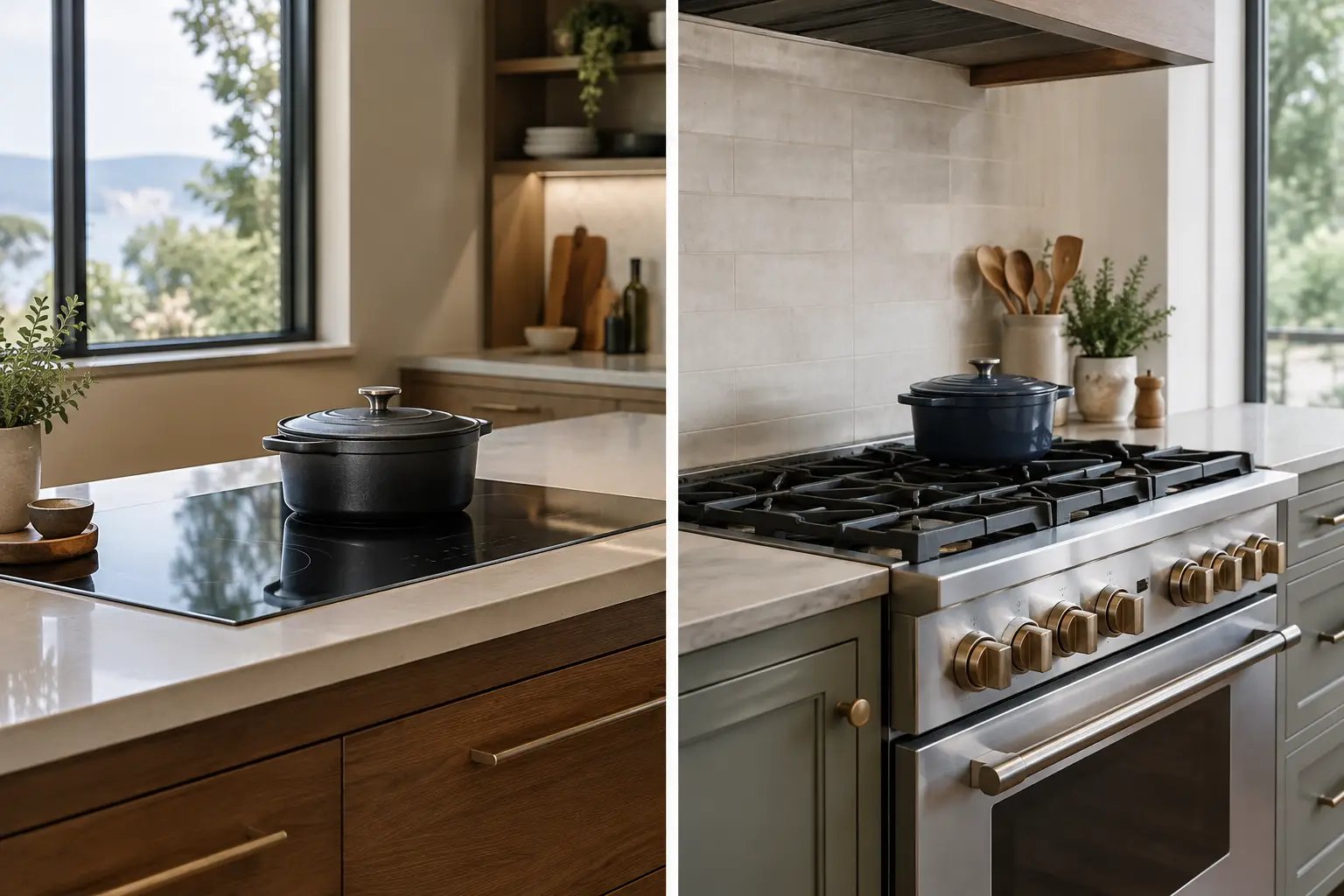
Induction uses electromagnetic energy to heat compatible cookware directly. The glass surface itself does not create heat in the same way an electric radiant cooktop does, which means it responds quickly and leaves less residual heat after cooking. It is especially good at holding a low simmer, bringing a pot to a boil efficiently, and keeping the kitchen more comfortable when several burners are in use.
That daily comfort matters in a compact Craftsman kitchen in Admiral, where an opened-up kitchen may now connect directly to the dining and living spaces. With induction, less excess heat spills into the room, and the flat surface wipes clean without removing burner grates or working around crevices. For households that cook often but do not want the kitchen to feel permanently like a work zone, that can be a meaningful advantage.
Gas has a different kind of appeal. The flame is visible, immediate, and familiar to many cooks. It works with nearly any cookware, including a round-bottom wok with the right grate, and some people prefer the tactile control of turning a flame up or down. Gas also remains a practical choice for homeowners who have cooked on it for years and know exactly how it behaves.
The trade-off is that gas produces combustion byproducts inside the home. A properly designed ventilation system is not an optional finishing touch for a gas range. It is part of the appliance decision. Even with induction, we generally plan ventilation carefully because cooking creates moisture, grease, and odors. But the need is more consequential with gas, particularly in a kitchen that opens into adjoining rooms.
What changes in the kitchen design when you choose induction?
The electrical plan is the first consideration. Most full-size induction ranges require a dedicated high-capacity electrical circuit, and a remodel may reveal that the existing panel needs attention before the new appliance can be supported. In a 1920s-40s bungalow, we also assess the condition and extent of any knob-and-tube wiring before finalizing the kitchen plan. It is far better to understand that work during design than to find it after cabinets are ordered and walls are open.
Gas has infrastructure needs of its own. If a kitchen is moving across the room, a new gas line may need to be routed. The range location must also work with the hood location, roof or exterior-wall access, structural conditions, and the kitchen layout. A beautiful range wall can become a compromised one if appliance selections are made before these systems are coordinated.
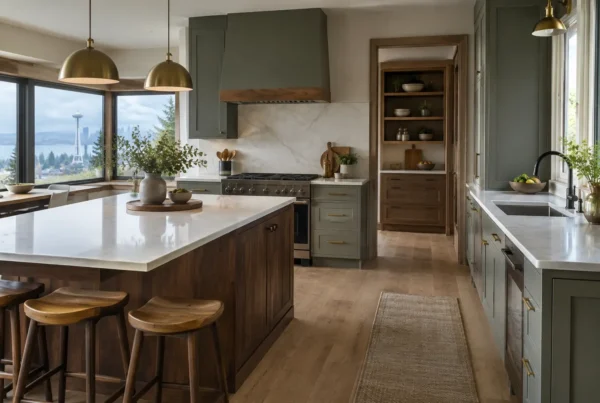
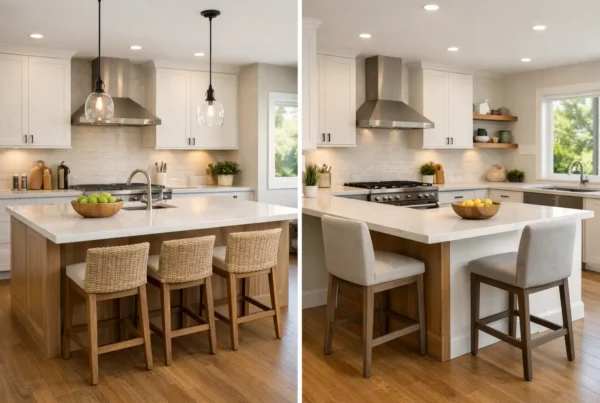
Induction offers more freedom in the visual treatment of the cooking zone. Its lower surface temperature can be useful when the cooktop sits on an island where people gather. It does not eliminate the need for clearance, thoughtful ventilation, or careful material selection, but it can make an island feel less like an industrial workstation. In kitchens where gray winter light is already limited, the uninterrupted plane of an induction cooktop can also keep the room visually quieter than a heavy gas range and grate assembly.
That does not mean every kitchen should hide the range. Some designs call for a substantial gas range as an architectural anchor, especially when the kitchen is organized around a classic range wall and a tailored hood. We consider the full composition: cabinet proportions, the hood surround, backsplash material, lighting, and what the homeowner wants to see when entering the room.
Does gas require more ventilation than induction?
Yes, although the right hood depends on more than the fuel source. Range output, cooking habits, duct path, ceiling height, and whether the kitchen is open to the rest of the home all affect the answer. A hood that is too small, too weak, or poorly ducted can leave odors and airborne grease lingering long after dinner.
For a gas range, we plan a hood that captures combustion byproducts as well as steam and cooking residue. For induction, the hood can often be approached with greater flexibility, but it still needs to handle the foods you cook. Someone who frequently sears, fries, or cooks aromatic meals needs real capture performance, not just a decorative statement piece.
The duct route deserves as much attention as the hood itself. In older Seattle homes, the shortest route outdoors is not always possible once framing, existing mechanical systems, and a load-bearing kitchen/dining wall enter the picture. We coordinate these elements before construction starts so the finished design does not ask the field team to solve a major systems problem on the fly.
Will my cookware work on an induction range?
Induction requires magnetic cookware. Cast iron and many stainless-steel pans work well; aluminum, copper, and glass cookware generally do not unless they have an induction-compatible magnetic base. A simple magnet test on the bottom of a pan is a useful first screen, though the appliance manufacturer should have the final word on compatibility.
For many homeowners, replacing a few favorite pieces is manageable. For someone with a large collection of specialty cookware, it deserves a more deliberate conversation. We do not want an appliance choice to feel like a surprise after move-in, especially when cooking is central to how the household lives.
Gas is more forgiving on this point. Any stable, heat-safe cookware can generally be used on a gas grate. The grates themselves, however, are heavier to clean, and spills can travel beneath them. This is not a deal-breaker, but it is a daily-use distinction worth seeing in person before deciding.
What happens during a power outage?
An induction range will not operate without electricity. For households on view lots or in neighborhoods where outage resilience is a priority, that should be part of the decision. A gas range may still require electricity for electronic ignition, oven controls, or safety systems, so it should not be assumed to be fully independent either.
The more useful question is how you want the home to function during an outage and whether backup power is part of the broader remodel conversation. Appliance planning works best when it is coordinated with electrical design, not treated as a last-minute purchase.
How do we choose without making the kitchen feel overplanned?
We narrow the decision through real habits: what you cook, who shares the kitchen, how often you entertain, whether cleanup speed matters, and what visual character fits the house. A mid-century home in Wedgwood may call for a different range presence than a painted-cabinet kitchen in West Seattle, but both deserve the same level of coordination behind the walls.
At NOR Design & Construction, we design the kitchen completely before pricing the work. The industry standard is an estimate that moves, often with allowances that later become change orders. We design first, then issue a fixed bid, so our clients know the real number before they sign a construction contract. That process lets us account for the electrical work, ventilation path, cabinetry details, and appliance requirements that make a range decision real rather than theoretical.
A range is one part of a kitchen, but it touches nearly every other decision. In a design consultation, we can help you weigh induction and gas against your cooking style, your home’s existing conditions, and the atmosphere you want the finished room to have. To begin the conversation, book a design consultation or call us at 206.979.3420.