A remodel can be beautifully built and still feel unfinished if furnishing a remodeled home becomes an afterthought. The cabinetry is installed, the lighting is right, and the new floor is finally free of protective paper – but the sofa is too deep for the room, the dining table interrupts circulation, or the window treatments arrive long after gray winter light has made the living room feel exposed.
We see this most often when a homeowner has made careful decisions about the architecture but has had to postpone the decisions that make the architecture livable. Furnishings are not the decorative layer added at the end. They determine how a remodeled home is used, how it sounds, where people sit, and whether the rooms feel calm rather than newly assembled.
When should we start furnishing a remodeled home?
Start during design, not after the final walkthrough. That does not mean every pillow needs to be selected before construction begins. It means we establish the major pieces early enough for the room itself to respond to them.
A dining table determines the clearance around an island. A sectional affects whether a family room needs a floor outlet and where reading lights belong. Bed size influences wall space, window placement, and the location of switches. In a whole-home project, these decisions can also shape which existing pieces deserve a place in the new plan and which ones no longer suit the way the household lives.
This matters especially in a 1920s-40s bungalow or Craftsman, where rooms were often smaller and more defined than homeowners expect. Removing a load-bearing kitchen/dining wall may create the connection a family wants, but the newly open room still needs zones with a human scale. A dining table, lounge seating, and a properly sized rug can make that openness feel intentional instead of cavernous.
Our design and remodeling process puts those conversations in the design phase, alongside cabinetry, lighting, and finishes. Because we design and build under one team, furnishing decisions do not have to be translated between an interior designer and a separate general contractor. We can coordinate dimensions, electrical requirements, lead times, and installation sequencing while the project is still on paper.
What should be chosen before construction starts?
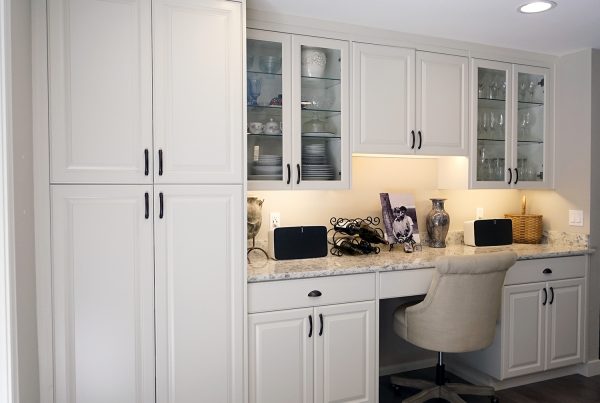
The pieces that affect the built environment should be resolved first: upholstered seating, dining furniture, beds, key storage pieces, window treatments, rugs, and major art or mirrors when their scale affects wall composition. The goal is not to over-control every detail. It is to prevent costly-looking compromises, such as a beautiful built-in with no comfortable chair beside it or a dining room that cannot accommodate the table the household actually needs.
Window treatments deserve particular attention in Seattle. In an Admiral Craftsman with original windows, treatments may need to respect trim that should remain visible while still offering privacy and warmth. In a view lot above Alki or Fauntleroy, the question is different: how do we soften glare and create evening privacy without closing off the water or skyline? Those are design decisions, not accessories to order later.
We also plan for the less visible parts of furnishing. A large rug can improve acoustics in an open kitchen and living area. Proper drapery can soften a room with hard surfaces. Storage furniture can keep a family room from becoming the default holding area for backpacks, chargers, and games. A home should photograph well, certainly, but its better test is an ordinary Tuesday morning.
How do we keep new furnishings from feeling too matched?
A fully remodeled room does not need a matching suite of furniture to feel cohesive. In fact, too much coordination can make a home feel like a showroom. We usually begin with a clear architectural direction – the warmth of white oak, the depth of painted cabinetry, the character of existing trim, or the clean lines of a mid-century home in Wedgwood – then build in variation through texture, shape, and age.
A tailored sofa can sit comfortably with an inherited wood table. A contemporary light fixture may be exactly right in a traditional home when its scale and finish acknowledge the room around it. The trade-off is that mixing pieces requires more restraint. If every item asks for attention, the room becomes busy. If every item is quiet, it can lose personality.
We help clients identify the pieces worth retaining before design moves too far ahead. Sentimental value matters, but so does proportion. A beloved cabinet may be perfect in an entry or study rather than forced into a newly streamlined living room. Moving a meaningful piece to the right room often preserves it better than trying to make it carry a role it no longer fits.
How does furnishing affect the remodel budget and schedule?
Furniture, lighting, window treatments, and styling should have their own clear plan from the beginning. The industry often relies on estimates that move, with allowances that later turn into change orders when selections become real. We take a different path: we complete the design before issuing a fixed bid for construction, so our clients know the real construction number before they sign a contract.
That clarity allows the furnishing plan to be considered honestly alongside the remodel rather than treated as an unknown waiting at the end. Not every household wants us to source every finishing piece, and not every room needs to be completed at once. But the priorities should be deliberate. It may make sense to furnish the kitchen, dining, primary bedroom, and main living area first, while a secondary room waits. It rarely makes sense to spend heavily on a remodel only to settle for poorly scaled pieces because no plan was made for them.
Lead times are another reason to begin early. Some furnishings can be selected near the end of construction; custom upholstery and certain window treatments may need more runway. Our planning is designed to shorten the active construction phase, and coordinating furnishings early helps avoid a finished home that remains half-settled because a key piece was not anticipated.
Can the rooms be furnished before the remodel is completely done?
Usually, final delivery waits until the dust is gone, punch-list work is complete, and surfaces can be protected properly. Still, the work behind a well-furnished home happens much earlier. We can confirm dimensions, review samples under the home’s actual light, and prepare installation plans while construction is underway.
This is particularly helpful in older Seattle homes, where discoveries can occur behind walls. Knob-and-tube wiring, uneven framing, or an unexpected structural condition may require a design adjustment. We do not pretend those discoveries are impossible. Instead, having one accountable team means a shift in the built work can be checked immediately against lighting plans, furniture clearances, and the overall interior direction.
For clients who want support beyond construction, our manufacturer partnerships allow us to carry the project into furnishings and styling. The result is not a home filled quickly. It is a home whose furnishings belong to its architecture and to the people living there. You can see how complete interior decisions support remodeled spaces in our project gallery.
What makes a remodeled home feel finished rather than merely furnished?
The answer is usually proportion. The right sofa is not simply attractive; it leaves enough room to walk through the space without turning every trip to the kitchen into an obstacle course. The right dining fixture does not merely make a statement; it gives the table presence without competing with the view. The right rug anchors a conversation area without stopping short of the furniture that needs to sit on it.
Layering matters, too. A remodeled home needs practical light for cooking, reading, and getting ready, then softer light for the hours when the workday is over. It needs places to put down a drink, conceal everyday clutter, and display objects that make the rooms recognizably yours. These are small decisions individually, but together they are what make a home feel settled.
A remodel should be livable as soon as the crew leaves, not long after when the last chair finally arrives. If you are planning a kitchen, a bath or the whole house, bring the furniture questions into the first design conversation rather than the last one. NOR Design & Construction can carry a project from layout through the finished room — start with a design consultation, or call 206.979.3420.